
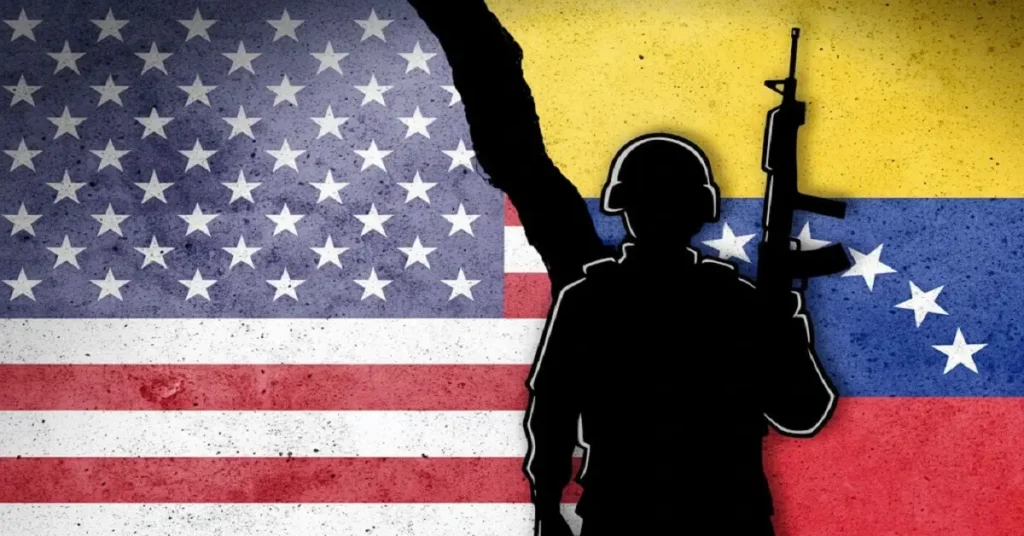
Venezuela war with the US: Trump’s airspace closure Nov 29, 2025, sparks fears—Maduro’s guerrilla plans, U.S. threats, and escalation risks explained.
Tensions between the United States and Venezuela reached a boiling point on November 29, 2025, when President Donald Trump declared the country’s airspace “closed in its entirety,” effectively grounding flights and escalating a long-simmering standoff. The announcement, made without prior warning, has drawn sharp condemnation from Caracas as “colonialist aggression,” while U.S. officials cite drug trafficking threats and national security risks. As Venezuela’s military prepares for potential conflict and international observers warn of regional fallout, the specter of a “Venezuela war with the US” looms larger than ever.
As of November 30, 2025, no shots have been fired, but the rhetoric and preparations suggest a dangerous brinkmanship. With Maduro’s regime facing U.S. sanctions over disputed elections and human rights abuses, Trump’s move signals a hardening of America’s “maximum pressure” strategy. For those tracking this flashpoint, here’s a clear breakdown of the latest developments, military postures, and what could come next.
Trump’s Airspace Closure: The Spark That Ignited Fears
Trump’s declaration came during a Mar-a-Lago briefing, stating the airspace over and around Venezuela should be considered off-limits to U.S. operators. The FAA quickly issued a NOTAM advisory, warning of “potentially hazardous” conditions including electronic interference and drone threats.
This isn’t isolated—Trump linked it to recent incidents involving Venezuelan “drug boats” in the Caribbean and Pacific, which he claims have caused over 80 deaths. The order halts commercial flights, reroutes cargo, and disrupts humanitarian aid routes, affecting thousands of passengers and businesses.
Venezuela’s Foreign Minister Yván Gil Pinto fired back on state media, calling it an “extravagant, illegal, and unjustified aggression” aimed at regime change to seize oil reserves. Caracas vowed to challenge it at the International Civil Aviation Organization (ICAO).
Venezuela’s Military Preparations: Guerrilla Tactics and “Battlefronts”
Facing a vastly superior U.S. force, Venezuela’s strategy emphasizes asymmetric warfare over conventional battles. Maduro announced on September 11, 2025, the deployment of military, police, and civilian defenses across 284 “battlefronts” nationwide, involving small units for sabotage and prolonged resistance.
Key elements include dispersing forces to over 280 locations upon attack, hiding equipment, and launching guerrilla operations. The military has 5,000 Russian-made Igla shoulder-fired missiles, praised by Maduro for anti-aircraft defense.
Another approach, termed “anarchization” by sources, involves intelligence services and armed ruling-party supporters creating urban chaos in Caracas to make the country ungovernable. However, experts estimate only thousands—not millions—of civilians would join, given low morale and training.
U.S. Perspective: Security Threats and Regime Pressure
The White House frames the closure as a protective measure against “imminent threats,” including alleged Venezuelan involvement in drug trafficking networks. Trump has hinted at possible land-based actions, building on sanctions that froze $7 billion in assets since 2019.
U.S. military superiority is stark: Venezuela’s forces, weakened by corruption and low pay ($100 monthly salaries), rely on outdated Russian Sukhoi jets and tanks from the 2000s. Desertions could surge in any conflict, per analysts.
Recent developments include Trump’s reported call with Maduro discussing a potential U.S. visit, hinting at backchannel diplomacy amid the tough talk.
Global Reactions and Risks of Escalation
China and Russia, key Venezuelan allies, decried the move as “hegemonic,” while Colombia worried about spillover into shared airspace. The EU called for restraint to avoid humanitarian catastrophe in a nation already grappling with 7 million refugees.
Escalation risks include disrupted oil exports (300,000 barrels daily to the U.S.) and proxy involvement from Colombian guerrillas or Maduro’s “colectivos”—armed civilian militias. A full war seems unlikely given U.S. commitments elsewhere, but miscalculations could spark limited clashes.
Conclusion: Brinkmanship or Breaking Point?
The Venezuela war with the US remains rhetorical for now, but Trump’s airspace closure on November 29, 2025, has pushed both sides closer to the edge. With guerrilla plans in Caracas and U.S. warnings echoing, de-escalation hangs by a thread.
Diplomacy may yet prevail, but the world watches warily as old grievances fuel new confrontations.
Will this lead to talks or troops? What’s your read on the risks? Comment below.