
solar eclipse August 2, 2027: ‘Eclipse of the century’ with 6:23 totality—9 facts on path, visibility, history, and viewing tips.
Solar eclipses have captivated humanity for millennia, turning day into night in a cosmic spectacle that feels both awe-inspiring and otherworldly. But the total solar eclipse of August 2, 2027, stands out as “the eclipse of the century,” a rare alignment promising the longest duration of totality in over a thousand years. Visible across a swath of the globe from the Atlantic to the Pacific, this event will plunge millions into temporary darkness for up to 6 minutes and 23 seconds—an extraordinary stretch that eclipses even the famed 2024 North American eclipse.
As of December 2025, excitement is building among astronomers, travelers, and skywatchers worldwide, with bookings for prime viewing spots already surging. Dubbed the “eclipse of the century” by experts like those at NASA and the International Astronomical Union, it’s not just about length; it’s a perfect storm of rarity, path, and visibility. For anyone planning a once-in-a-lifetime trip or simply curious about this celestial wonder, here are 9 essential facts to know about the 2027 eclipse, drawing from recent reports and scientific insights.
1. The Record-Breaking Totality: Longest in 1,000 Years
The hallmark of the August 2, 2027, eclipse is its unprecedented duration of totality—the period when the moon completely blocks the sun. At maximum, it will last 6 minutes and 23 seconds along the centerline, surpassing the previous record of 7 minutes and 31 seconds set in 1955 over the Philippines.
This extended darkness allows for prolonged stargazing during the day, with planets like Venus and Jupiter visible alongside the sun’s corona. Astronomers note that such long totality occurs only when the moon is near perigee (closest to Earth) and the sun at aphelion (farthest), creating an ideal geometric alignment rare every few centuries.
For context, the 2024 U.S. eclipse topped out at 4 minutes and 28 seconds—making 2027’s a true standout for eclipse chasers.
2. The Path of Totality: A Global Journey from Atlantic to Pacific
The eclipse’s shadow will carve a 268-kilometer-wide path across Earth’s surface, starting in the North Atlantic Ocean near Greenland and sweeping through Spain, Gibraltar, Morocco, Algeria, Tunisia, Libya, Egypt, Saudi Arabia, Yemen, Somalia, and the Indian Ocean before ending in northern Australia and the South Pacific.
In Europe, it begins over the Iberian Peninsula, offering prime viewing in cities like Madrid and Seville. Africa sees the shadow race across the Sahara to the Horn of Africa, while the finale dazzles remote Australian outback spots and Pacific islands. This diverse route spans 11 countries and three continents, making it accessible yet adventurous.
Unlike the 2024 path confined to North America, 2027’s global arc invites international eclipse tourism, with hotels in Luxor, Egypt, already 90% booked as of November 2025.
3. Visibility: Where and How to Watch the Eclipse
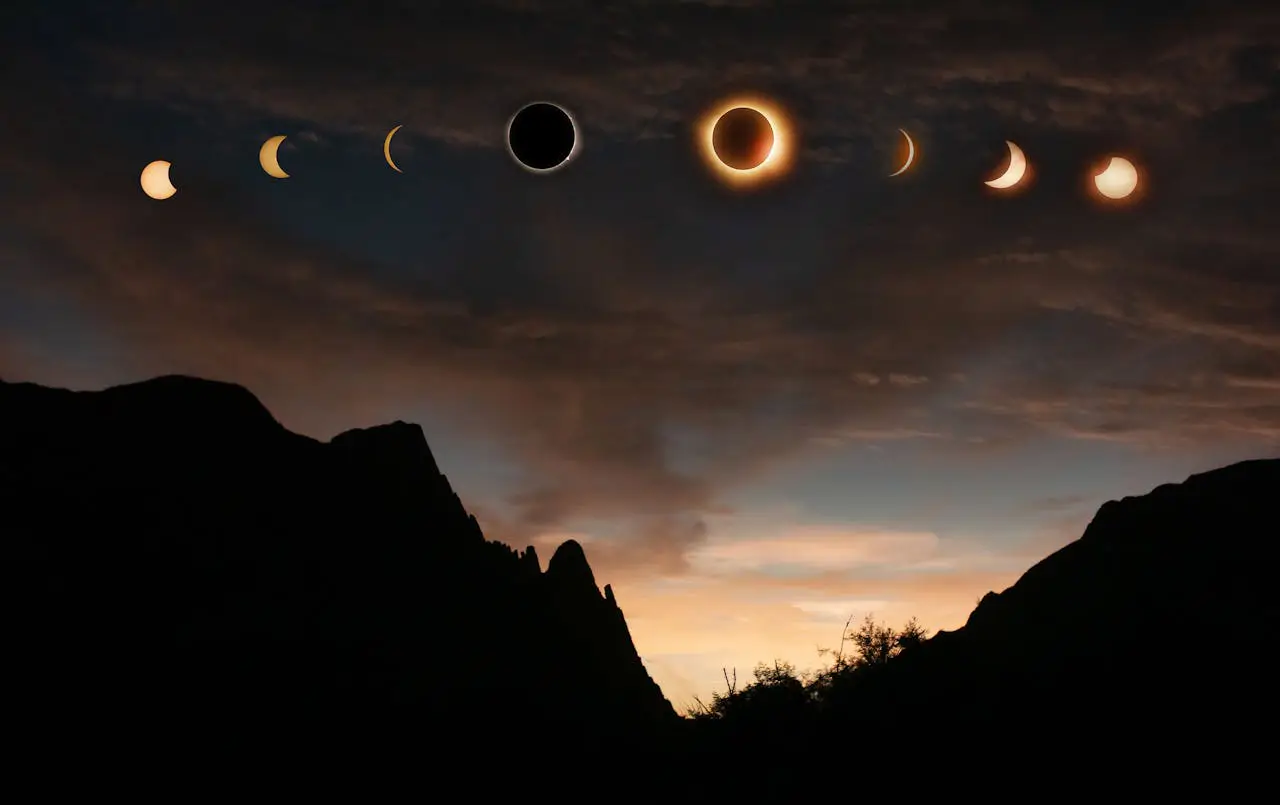
Partial phases will be visible across Europe, Africa, Asia, and Australia, affecting over 2 billion people. Totality, however, demands positioning within the narrow path—ideal spots include Gibraltar’s Rock for dramatic sea views, Luxor’s ancient temples under darkened skies, or Broome, Australia’s coastal dunes.
Safety is paramount: NASA recommends ISO 12312-2 certified glasses for the partial phases, as direct sun gazing risks permanent eye damage. Online streams from observatories like Mauna Kea or apps like Eclipse Safari will provide virtual access for those unable to travel.
Weather plays a spoiler; forecasts favor clear skies in the Mediterranean (70% chance) over cloudy Somalia (40%). Apps like TimeandDate offer interactive maps for personalized viewing times.
4. Scientific Significance: Probing the Sun’s Corona and Beyond
Beyond beauty, the 2027 eclipse offers a rare window for solar research. During totality, scientists can study the sun’s corona—the plasma halo invisible in daylight—revealing insights into solar winds and space weather that impact Earth’s satellites and power grids.
Ground-based telescopes and NASA’s Parker Solar Probe will capture high-res data, building on 2024’s discoveries of coronal mass ejections. Amateur astronomers can contribute via citizen science projects, photographing Baily’s beads—the sparkling edges as sunlight pierces lunar valleys.
This eclipse coincides with solar maximum in Cycle 25, amplifying aurora-like effects and coronal streamers for spectacular views.
5. Historical Context: Eclipses That Shaped Human History
Solar eclipses have influenced civilizations for ages—from Babylonian priests predicting them in 1375 BCE to Christopher Columbus bluffing natives in 1504 by “summoning” one. The 1919 eclipse confirmed Einstein’s general relativity, bending starlight around the sun.
2027 joins legends like the 1918 “Midnight Eclipse” over Oregon or the 1991 Baja California totality. As the longest since 1955, it revives eclipse chasers’ lore, with historians noting ancient cultures’ rituals to “feed” the sun god.
In 2025’s era of space tourism, it also teases future hybrids: NASA’s Artemis program eyes lunar eclipse views from orbit by 2028.
6. Travel and Viewing Tips: Planning Your Eclipse Adventure
With the path hitting tourist hotspots, book early—flights to Gibraltar are up 40% year-over-year per Kayak data. Opt for totality centerline for maximum duration; apps like X eclipses plot your spot.
Pack essentials: certified glasses, binoculars with solar filters, and a portable power bank for live-streaming. Weather apps forecast clouds; backups like Egypt’s deserts offer 80% clear odds. Group tours from Eclipse Traveler provide guided experiences with astronomers.
Ethical tip: Respect local cultures, especially in Somalia or Yemen, where eclipses hold spiritual significance.
7. Safety and Myths: Debunking Eclipse Dangers
Myths persist—eclipses don’t cause pregnancies or bad luck, per NASA debunkings. Real risks: retinal burns from unprotected viewing, affecting 1 in 10 unsafe watchers in 2024. Use proper filters; never with phone cameras alone.
Pregnant women and animals are safe, but pets may howl at the sudden dark. Hydrate in hot paths like Saudi Arabia, where temperatures hit 40°C during the event.
8. Economic Boost: Eclipse Tourism’s Global Impact
The 2024 U.S. eclipse generated $1.6 billion in tourism, per the Travel Industry Association; 2027 could double that with its international path. Spain anticipates 500,000 visitors, boosting GDP by €200 million.
Local economies thrive on hotels, flights, and merch—Egypt’s Luxor expects a 30% sales spike. This “eclipse economy” highlights astronomy’s soft power in 2025.
9. Future Eclipses: What’s Next After 2027?
2027 sets a high bar, but 2028’s annular eclipse crosses the U.S. Southwest, followed by 2033’s total over Alaska. The next long totality hits Greenland in 2039.
As climate change alters viewing (per a 2025 Nature study), preservation matters—2027 could be the last great one before paths shift.
Conclusion: Witnessing the Century’s Greatest Show
The August 2, 2027, solar eclipse earns its “eclipse of the century” title through unmatched totality, global path, and scientific bounty. From Gibraltar’s shores to Australia’s reefs, it promises a shared moment of wonder under darkened skies.
With safe viewing and planning, anyone can join this cosmic dance—nature’s reminder of our tiny place in the universe.
Planning to chase it? Favorite eclipse memory? Share below!