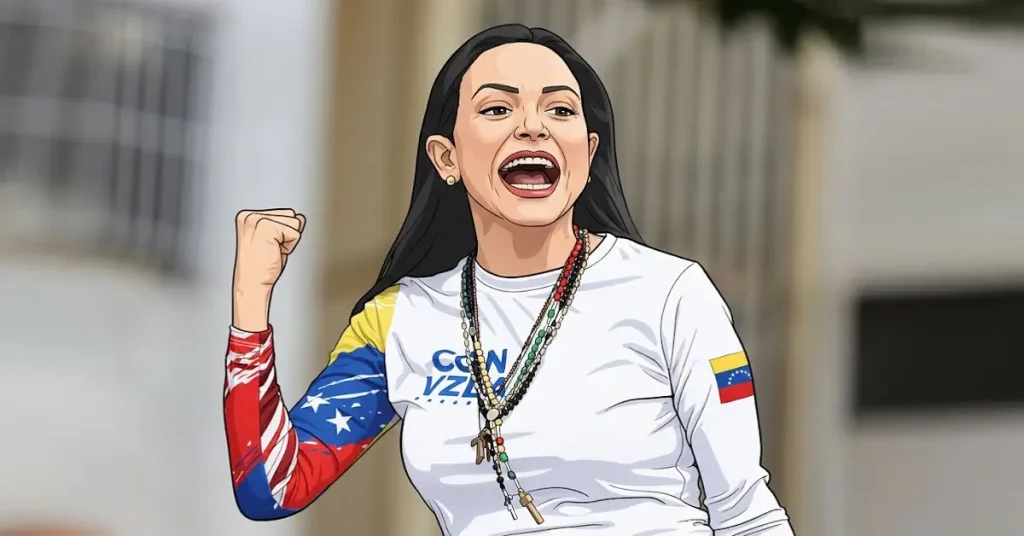
Who is Maria Corina Machado? Profile of Venezuela’s opposition leader and 2025 Nobel Peace Prize winner, explaining why she’s skipping the Oslo ceremony due to Maduro regime threats.
Venezuelan opposition leader Maria Corina Machado, a fierce critic of President Nicolás Maduro’s regime, has been awarded the 2025 Nobel Peace Prize for her decades-long fight for democracy in her troubled homeland. Yet, on the day of the prestigious Oslo ceremony—December 10, 2025—she will be conspicuously absent, underscoring the perilous reality of her activism. Instead, her daughter, Ana Corina Sosa, will accept the honor on her behalf, a poignant reminder of the personal costs exacted by authoritarian crackdowns.
As Venezuela grapples with disputed elections, economic collapse, and widespread repression, Machado’s story encapsulates the unyielding spirit of a nation’s resistance, drawing global attention to the human rights crisis in South America’s once-prosperous oil giant.
Who Is Maria Corina Machado? A Trailblazer in Venezuelan Opposition
Born in 1967 in Caracas, Maria Corina Machado grew up in a middle-class family amid Venezuela’s oil-fueled boom of the 1970s. An industrial engineer by training, she founded a technology company before pivoting to politics in the early 2000s, driven by disillusionment with Hugo Chávez’s socialist revolution. In 2002, she co-founded Súmate, a non-governmental organization focused on electoral integrity and voter rights, which spearheaded a failed 2004 recall referendum against Chávez—earning her both acclaim as a defender of democracy and enmity from the regime.
Elected to Venezuela’s National Assembly in 2010, Machado quickly emerged as a vocal dissident, advocating for transparency in oil revenues and human rights. Her parliamentary immunity was revoked in 2014 on charges of conspiracy, forcing her into a shadow role within the opposition. By 2023, she dominated an opposition primary with over 90% of the vote, positioning herself as the unified challenger to Maduro in the 2024 presidential election. However, Venezuelan authorities barred her from running, citing outdated ineligibility rulings, and she endorsed Edmundo González as her successor—a move that propelled the opposition to a claimed victory in July 2024, though Maduro clung to power amid fraud allegations.
Machado’s activism has garnered international accolades, including the 2014 Václav Havel Human Rights Prize and the 2024 Sakharov Prize, often collected by proxies due to travel bans. For democracy advocates or political activists navigating repressive environments, a practical tip: cultivate international alliances early—Machado’s engagement with bodies like the Organization of American States amplified her voice; start by documenting abuses through secure digital platforms and sharing with global watchdogs for amplified pressure.
Why Is She Not Attending the Nobel Ceremony? Security Risks and Regime Threats
The Nobel Peace Prize, announced in October 2025 by the Norwegian Nobel Institute, recognizes Machado’s “non-violent struggle for democratic governance and human rights in Venezuela.” The award ceremony in Oslo’s City Hall, a global beacon of hope, was set to culminate her improbable journey from barred candidate to laureate. Yet, Machado’s absence stems directly from the Maduro regime’s escalating threats: she faces not only an arrest warrant but also credible death threats that Norwegian officials say “extend beyond Venezuela’s borders, from the regime and the regime’s friends around the world.”
Kristian Berg Harpviken, director of the Peace Research Institute Oslo and a key Nobel figure, explained the decision: “She simply lives with a death threat from the regime.” Machado, who has been in hiding since the disputed July election, reemerged briefly in January 2025 for a defiant protest but remains underground, communicating via video messages that rally supporters. Her daughter, Ana Corina Sosa, a young activist in her own right, will step forward to receive the medal and diploma, continuing a family tradition of proxy acceptances amid peril.
This boycott highlights the ceremony’s inherent risks for dissidents from authoritarian states, echoing absences by figures like Belarus’ Sviatlana Tsikhanouskaya in 2022. In 2025’s landscape of hybrid threats—where regimes leverage proxies and cyber-harassment—Machado’s choice prioritizes survival over symbolism. For human rights defenders planning high-profile events, a practical tip: conduct thorough risk assessments with neutral experts—begin with scenario planning for travel disruptions, incorporating encrypted communications and contingency representatives to ensure representation without exposure.
The Broader Context: Venezuela’s Crisis and Global Ramifications
Machado’s Nobel nod arrives as Venezuela’s turmoil deepens: Maduro’s contested reelection has triggered mass protests, economic sanctions from the U.S. and EU, and a refugee exodus surpassing 7 million since 2014. Her movement demands Maduro’s ouster and fresh elections under international oversight, framing the prize as a moral victory for the opposition’s claim that González truly won 67% of the July vote. Supporters see it as leverage for renewed diplomacy, potentially pressuring Maduro’s allies like Russia and Iran.
Yet, challenges persist: Machado’s ineligibility stems from a 2014 ban tied to alleged financial improprieties, which she dismisses as fabricated. The regime has arrested thousands of her allies, including journalists and students, while blackouts and hyperinflation erode daily life. In a year marked by global democratic backsliding—from Myanmar to Nicaragua—her story resonates as a testament to perseverance. For international policymakers addressing authoritarian resilience, a practical tip: tie aid and recognition to verifiable reforms—initiate with targeted incentives like debt relief for election monitors, building momentum as Machado’s award does for accountability.
Maria Corina Machado’s empty seat in Oslo is more than a personal safeguard; it’s a stark indictment of Venezuela’s stolen freedoms. As her daughter accepts the prize, the world watches for Machado’s next move in a fight that shows no signs of abating. What does her Nobel win mean for Venezuela’s future, or how can global powers better support such figures? Share your views in the comments below, and stay informed via outlets like The New York Times for updates on the ceremony and aftermath.