Trump labeled Venezuela a terror organization and ordered blockade of oil in and out on December 16, 2025—details, responses, and implications.
President Donald Trump escalated his administration’s campaign against Venezuela on December 16, 2025, by labeling the country a “terror organization” and ordering a “total and complete blockade” of all sanctioned oil tankers entering and leaving its ports. As of December 17, 2025, this announcement has trended on social media, with #TrumpVenezuelaBlockade becoming a focal point for discussions about U.S. foreign policy, oil markets, and the future of Nicolás Maduro’s regime. The move, detailed in a video statement and reported by USA Today, marks a significant intensification of economic pressure on Venezuela, targeting its main source of income. Here’s what we know about Trump’s latest actions, Venezuela’s response, and the broader implications.
Trump’s decision comes amid ongoing U.S. military operations against Venezuelan drug boats, which have killed over 80 individuals since September 2025. The president’s rhetoric, captured in a video that has garnered millions of views, frames Venezuela as a hub for terrorism, drug smuggling, and human trafficking, justifying the blockade as a response to these threats. This escalation has raised questions about the trump labeled venezuela a terror organization and ordered blockade of oil in and out, its legality, and its impact on global oil markets.
Trump’s Announcement: A New Phase of Pressure
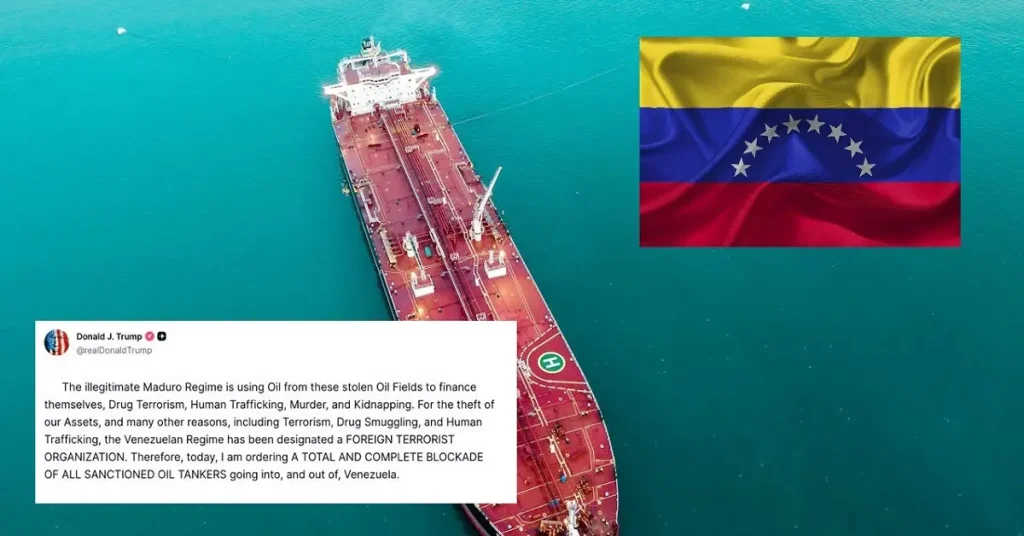
In a post on Truth Social, Trump wrote, “For the theft of our Assets, and many other reasons, including Terrorism, Drug Smuggling, and Human Trafficking, the Venezuelan Regime has been designated a FOREIGN TERRORIST ORGANIZATION. Therefore, today, I am ordering A TOTAL AND COMPLETE BLOCKADE OF ALL SANCTIONED OIL TANKERS going into, and out of, Venezuela.” This statement, accompanied by a video, was made during a White House briefing, where Trump emphasized the need to cut off Venezuela’s oil revenue to weaken Maduro’s regime.
— Marco Rubio (@marcorubio) December 17, 2025
The blockade targets vessels sanctioned by the U.S. Treasury Department, which include those linked to the Venezuelan state-owned oil company PDVSA and individuals associated with the Cartel de los Soles, a military faction allegedly involved in drug trafficking. Trump did not specify how the blockade would be enforced but mentioned the deployment of thousands of troops and nearly a dozen warships, including an aircraft carrier, to the region as part of the “Southern Spear” mission.
Venezuela’s Response: Defiance and Denial
Venezuela’s government swiftly condemned Trump’s actions, with Foreign Minister Yván Gil describing the blockade as “a grotesque threat” and an act of “economic warfare.” President Nicolás Maduro, in a televised address, rejected the label of “terror organization,” calling it a “ridiculous fabrication” aimed at justifying U.S. intervention. Maduro vowed to defend Venezuela’s sovereignty, stating, “We will not bow to Yankee threats. Our oil belongs to the Venezuelan people.”
The response has rallied domestic support, with protests in Caracas denouncing U.S. “hegemony.” Internationally, allies like Russia and China have criticized the blockade, warning of escalation. Maduro’s defiance, while bold, masks vulnerabilities—Venezuela’s economy is in tatters, and military readiness is questionable amid U.S. sanctions.
Implications: Oil Markets and Regional Stability
The blockade has immediate implications for global oil markets. U.S. crude futures climbed over 1% to $55.96 a barrel in Asian trading following Trump’s announcement, reflecting concerns about potential reductions in Venezuelan exports. Oil market participants noted that prices were rising in anticipation of disrupted supply, although they awaited details on enforcement and whether non-sanctioned vessels would be affected.
Regionally, the move could destabilize Latin America, potentially triggering refugee crises and proxy conflicts. Experts warn of violations under international law, as blockades require U.N. approval or self-defense justification. The U.S. claims self-defense against drug threats, but critics argue it’s disproportionate. Legal scholars like Elena Chachko of UC Berkeley Law School have questioned the precedent this sets for presidential authority in deploying military force abroad.
Domestic and International Reactions
Domestically, the policy has divided opinion—Trump supporters praise it as tough on crime, while opponents fear war. Polls show 55% approve of drug strikes but only 35% support economic blockades. The trend #TrumpVenezuelaBlockade reflects this divide, with posts ranging from “End Maduro’s regime now” to “No more wars.”
Internationally, the reaction has been mixed. European Union leaders expressed concern over the escalation, calling for dialogue, while Latin American countries like Colombia and Brazil urged caution. The U.N. Secretary-General António Guterres called for de-escalation, emphasizing the need for peaceful resolutions.
Conclusion: A High-Stakes Gamble
Trump Labels Venezuela a Terror Organization and Orders Blockade of Oil In and Out. As of December 17, 2025, Trump’s latest move against Venezuela signals a potential turning point in U.S.-Venezuela relations, with economic warfare looming. While aimed at curbing drugs and weakening Maduro, the blockade risks broader conflict, making “Maduro’s end” a phrase loaded with uncertainty. As events unfold, the world watches a delicate balance between security and escalation.
What do you think about Trump’s Venezuela policy? Share below.