
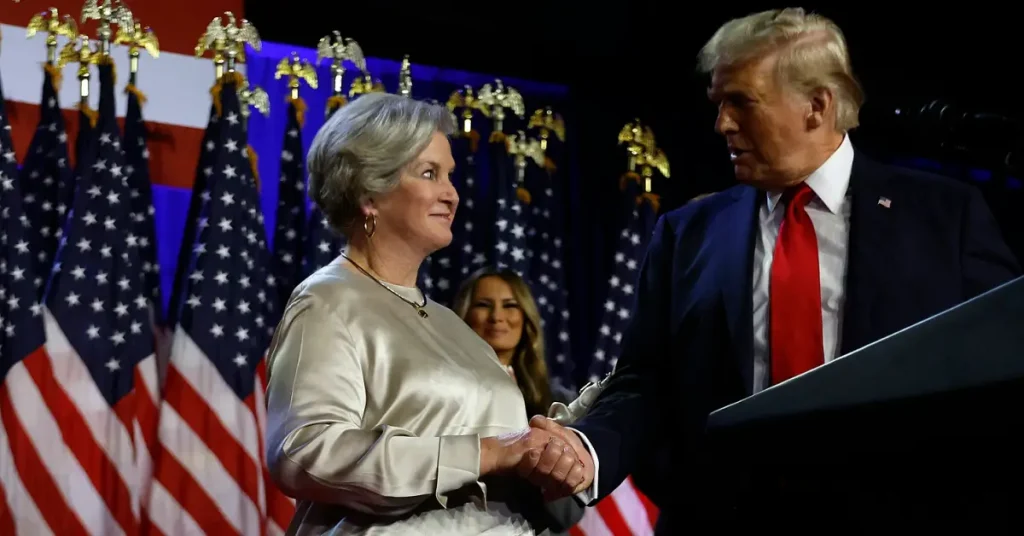
Who is Susie Wiles and why did she say Trump is alcoholic? Analysis of her remarks, background, and implications.
White House Chief of Staff Susie Wiles has sparked controversy with remarks about President Donald Trump’s personality, comparing it to that of an alcoholic, in a series of interviews with Vanity Fair published on December 17, 2025. As of the same date, the comments have trended on social media, with #SusieWilesTrump becoming a focal point for discussions about internal administration dynamics and Wiles’ role. The Guardian and Vanity Fair’s coverage highlights Wiles’ unprecedented access to Trump and her candid assessments, raising questions about Who Is Susie Wiles and Why Did She Say Trump Is Alcoholic? Here’s an in-depth look at Wiles’ background, the context of her statements, and the reactions they have elicited.
Wiles, the first woman to serve as White House chief of staff, has been a key figure in Trump’s political resurgence, credited with orchestrating his 2024 campaign victory. Her remarks, part of a broader profile on the Trump administration, have reignited debates about Trump’s leadership style and the challenges of working closely with him. The controversy underscores the tension between loyalty and candor in the highest echelons of power.
Who Is Susie Wiles?
Susie Wiles, born in 1957, is a seasoned Republican operative with over four decades of experience in politics. She grew up in Lake City, Florida, and is the daughter of late football legend Pat Summerall. Wiles’ career includes stints with presidents, governors, and mayors, but she gained national prominence as Trump’s Florida campaign manager in 2016. Her strategic acumen was pivotal in securing Florida, a critical swing state, helping Trump win the presidency.
In 2024, Wiles served as Trump’s campaign manager, widely praised for running what many consider his most disciplined campaign. Her appointment as chief of staff in November 2024 made her the first woman in that role, a milestone Trump celebrated as “well deserved.” Wiles operates with a low profile, often referred to as “the ice maiden” for her calm demeanor under pressure. Her influence extends to controlling access to the president, making her one of the most powerful figures in the administration.
Wiles’ background includes working with figures like Senator Rick Scott and Governor Ron DeSantis, showcasing her ability to navigate Republican politics. Her personal life, marked by a marriage to a lobbyist and a divorce, adds layers to her public persona, but she remains focused on her professional role.
Why Did She Say Trump Is Alcoholic?
In the Vanity Fair interviews, Wiles made a striking comparison, stating, “Trump has an alcoholic’s personality.” She elaborated, “High-functioning alcoholics or alcoholics in general, their personalities are exaggerated when they drink. So I’m a little bit of an expert in big personalities.” Wiles attributed this insight to her upbringing with an alcoholic father, suggesting it equipped her to handle Trump’s larger-than-life persona.
The context of her remark is crucial. Wiles clarified that Trump does not drink alcohol, a fact well-known due to his public stance against it, influenced by his brother’s struggles with alcoholism. Instead, she was referring to Trump’s governing style, characterized by impulsiveness, grandiosity, and a belief that “there’s nothing he can’t do. Nothing, zero, nothing.” This comparison, while metaphorical, has been interpreted as a critique of Trump’s decision-making process, which often bypasses traditional channels.
Wiles’ comments also touched on other administration figures, like Vice President JD Vance, whom she called a “conspiracy theorist” for a decade. These remarks, part of a broader narrative about chaos within the Trump White House, have led to backlash from Trump loyalists and speculation about her motives.
Reactions and Implications
The trend #SusieWilesTrump reflects a divide. Supporters of Trump view her comments as disloyal, with posts like “Susie Wiles is undermining the president” gaining traction. Critics, however, see her candor as refreshing, with one X user stating, “Finally, someone inside speaks the truth about Trump.”
Politically, Wiles’ remarks could impact her standing. Trump defended her in a New York Post interview, calling her “fantastic” and suggesting she was “deceived” by the Vanity Fair writer. Press Secretary Karoline Leavitt echoed this, praising Wiles’ leadership and dismissing the article as biased. However, the internal dissent highlighted by Wiles’ comments may affect policy implementation and administration unity.
The alcoholic comparison has also reignited discussions about Trump’s mental fitness and leadership style, topics that have persisted since his presidency. Mental health experts caution against equating personality traits with alcoholism, but Wiles’ analogy resonates with those familiar with Trump’s modus operandi.
Broader Context: The Role of the Chief of Staff
Wiles’ position as chief of staff is one of the most critical in the White House, responsible for managing the president’s schedule, advising on policy, and mediating conflicts. Her unprecedented access to Trump, described as “more than anyone else,” underscores her influence. The Vanity Fair profile, part of a series, aims to dissect the inner workings of the Trump administration, with Wiles’ insights offering a rare glimpse.
Her role has been both praised and scrutinized. Allies credit her with stabilizing Trump, while detractors argue she enables his worst impulses. The alcoholic comparison, therefore, is not just personal but indicative of the challenges she faces in balancing loyalty with governance.
Conclusion: A Defining Moment
Who Is Susie Wiles and Why Did She Say Trump Is Alcoholic? As of December 17, 2025, Wiles’ remarks have thrust her into the spotlight, revealing tensions within the Trump administration. Her background as a seasoned operative and her role as the first female chief of staff frame her comments, which, while controversial, offer insight into Trump’s leadership. As the administration navigates these revelations, Wiles’ position and the broader implications for American politics remain under scrutiny.
What do you think about Susie Wiles’ comments? Share your thoughts below.