
What is US Institute of Peace and why Trump renamed it after himself? Details on the controversy, implications, and reactions.
The U.S. Institute of Peace (USIP), a nonpartisan organization dedicated to promoting peace and conflict resolution globally, has been renamed the “Donald J. Trump Institute of Peace,” sparking controversy and debate as of December 3, 2025. President Donald Trump announced the change during a ceremony at the organization’s headquarters in Washington, D.C., arguing that his administration’s peace initiatives warranted the renaming. This move, reported by CNN and The Hill, has trended on social media, with #TrumpInstituteOfPeace becoming a focal point for discussions about the Institute’s mission, Trump’s legacy, and the appropriateness of such a renaming. Here’s a detailed exploration of what the USIP is, why Trump chose to rename it, and the implications of this decision.
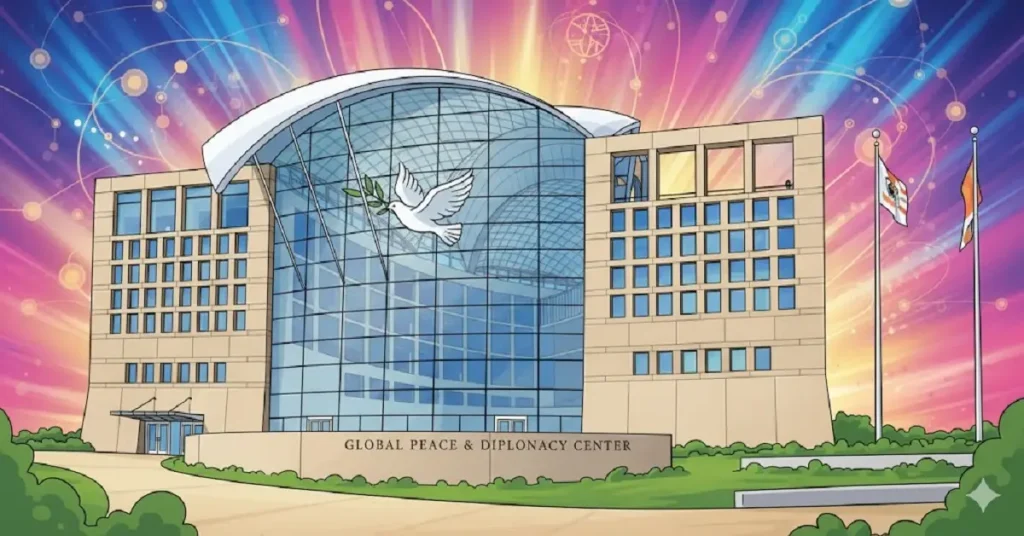
Founded in 1984 by an act of Congress, the USIP is an independent, nonpartisan institution that works to prevent, mitigate, and resolve violent conflicts around the world. Its mission includes research, education, and direct engagement in peacebuilding efforts, often in collaboration with governments, NGOs, and international organizations. The Institute’s headquarters, located near the State Department, has been a symbol of American commitment to global peace. However, Trump’s decision to affix his name to the building has raised questions about the politicization of a traditionally neutral entity and the legacy he seeks to leave.
What Is the US Institute of Peace?
The U.S. Institute of Peace was established to provide an intellectual and practical resource for peacebuilding, free from the constraints of government policy. Its board of directors, appointed by the president and confirmed by the Senate, includes experts in international relations, conflict resolution, and human rights. The Institute’s work spans regions like Afghanistan, Syria, and Ukraine, where it has facilitated dialogues, trained peacekeepers, and supported democratic transitions.
Historically, USIP has maintained a low profile, focusing on substance over spectacle. Its annual budget, around $50 million, supports research, grants, and field operations. The organization prides itself on its independence, often critiquing U.S. foreign policy when necessary. This independence has been a cornerstone of its credibility, making Trump’s renaming a point of contention.
Why Trump Renamed It After Himself
Trump’s decision to rename the Institute reflects his ongoing effort to cement his legacy as a peacemaker, despite a tenure marked by controversy. During the renaming ceremony on December 3, 2025, Trump stated, “I ended eight wars in less than a year, and this Institute will now reflect the greatest dealmaker in our nation’s history.” He pointed to his administration’s peace deals, including the Abraham Accords and a recent agreement between Rwanda and the Democratic Republic of Congo, as justification.
Several factors likely influenced this move:
- Legacy Building: Trump has long sought recognition for his foreign policy achievements, including his unsuccessful bid for a Nobel Peace Prize. Renaming the USIP is a tangible way to claim credit for peace efforts.
- Political Statement: The renaming coincides with a period of heightened tension over his administration’s policies, such as military strikes in the Caribbean and immigration bans. It serves as a counter-narrative, emphasizing peace over conflict.
- Control and Influence: Trump’s administration has faced criticism for seizing control of independent entities, like the USIP, to align them with his agenda. The renaming follows a controversial takeover earlier in 2025, where the Institute’s board was ousted and replaced with Trump loyalists.
A White House spokesperson, Anna Kelly, defended the change, saying, “The United States Institute of Peace was once a bloated, useless entity. Now, the Donald J. Trump Institute of Peace will stand as a powerful reminder of what strong leadership can accomplish for global stability.”
Controversy and Reaction
The renaming has not been without backlash. Critics argue that it undermines the Institute’s nonpartisan status. George Foote, a lawyer for former USIP leadership, told NPR, “This adds insult to injury, politicizing an institution meant to rise above politics.” Democrats, including Sen. Chris Murphy (D-CT), have condemned the move as narcissistic, with Murphy stating on X, “Trump’s ego knows no bounds, even at the expense of peace.”
Supporters, however, see it as a fitting tribute. Rep. Marjorie Taylor Greene (R-GA) posted, “President Trump deserves this honor for bringing peace to the world.” The decision has also divided public opinion, with #TrumpInstituteOfPeace trending alongside #SaveUSIP, reflecting the polarized response.
Legally, the renaming has faced challenges. A federal district court initially overturned Trump’s seizure of the Institute in May 2025, but an appeals court reversed this, putting the building back in government hands. The new name, “Donald J. Trump Institute of Peace,” is now prominently displayed, despite ongoing litigation by former staff.
Implications for the Institute and Beyond
The renaming could have several implications:
- Mission and Credibility: The Institute’s ability to operate as a neutral broker may be compromised, potentially affecting its relationships with international partners.
- Funding and Support: Donations and government funding might be influenced by the perceived politicization, with some donors pulling back and others stepping up.
- Precedent for Other Institutions: This move could encourage similar actions by future administrations, blurring the lines between government and independent entities.
The timing, just before the 2026 midterms, also suggests a political strategy. Trump aims to rally his base by highlighting what he sees as achievements, while critics view it as a distraction from other controversies, like the Caribbean strikes and immigration policies.
Conclusion: A Controversial Legacy
What Is US Institute of Peace and Why Trump Renamed It After Himself? As of December 4, 2025, the renaming of the U.S. Institute of Peace to the Donald J. Trump Institute of Peace is a bold statement on Trump’s legacy and the role of independent institutions in American democracy. While it reflects his desire to be remembered as a peacemaker, it also raises questions about the politicization of peace efforts and the future of the Institute. As debates continue, the renamed entity stands as a symbol of both achievement and contention in Trump’s final year in office.
What do you think about the renaming? Share your perspective below.